There is an enduring allure to the classic American home interior—a quality that transcends time and trends. When we conjure images of “cozy American home decor,” it’s rarely about sleek, minimalist surfaces or avant-garde design. Instead, it’s a mental sanctuary of warm stone fireplaces, well-worn libraries, plush sofas, and layers of rich textiles.
This aesthetic is rooted in the concepts of hospitality, tradition, and, above all, comfort. It is about creating spaces that are not just beautiful to look at, but are deeply restful and restorative to live in.
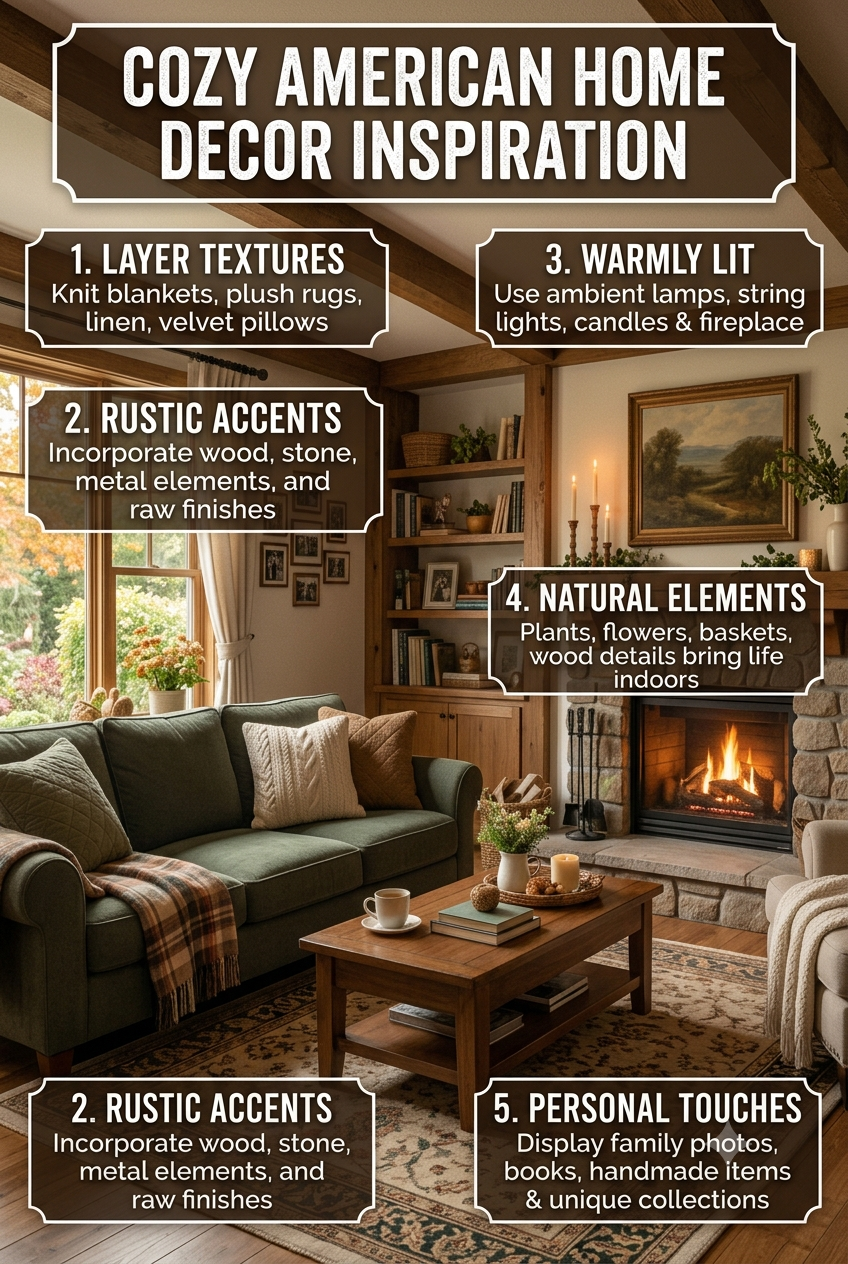
The provided infographic serves as an excellent blueprint for this philosophy. In this comprehensive guide, we will expand on the five core pillars presented—Layered Textures, Rustic Accents, Warm Lighting, Natural Elements, and Personal Touches—to explore how you can translate these principles into your own home to create a sanctuary of enduring coziness.
Introduction: The Soul of American Comfort
The concept of a “cozy American home” is less about a rigid style and more about an emotional response. It’s the feeling of walking into a space and immediately relaxing. It’s the sanctuary from a busy world, a place where memories are made and cherished. Historically, this aesthetic is a fusion of rustic cabin practicality, the warmth of British country manor style, and the personal, eclectic nature of the American spirit.
It is a style that values substance over show. It is not about perfect symmetry, but about finding a comfortable balance. When we analyze the infographic, we see a room that feels lived-in, curated over time, and deeply inviting. Let’s break down the elements that make this possible.
Pillar 1: Layer Textures for Tangible Comfort
The first and arguably most important pillar is the addition of varied textures. A sleek, polished room can be beautiful, but it will never be cozy. True comfort must be experienced tactilely.
In the example image, we see a masterful application of texture. The base is a velvet-soft sofa, but it is the layers upon it that create depth. The key is diversity.
1.1 The Art of the Blanket
The simple presence of a knit blanket, as suggested in the graphic, is a visual cue for rest. Think beyond just “a” blanket; consider a variety of materials. Place a chunky wool-knit throw over an armchair and a softer, woven cotton or velvet blanket on the sofa. In colder months, the texture should be heavier; in warmer months, lighter but still tactile. The blanket should be draped or folded to look like it is ready for immediate use, not perfectly stylized.
1.2 The Power of Plush Rugs
Flooring plays a massive role in a room’s cozy quotient. Hardwood floors are a staple of the American home, providing a sense of history and warmth. However, a bare wood floor can feel cool. Area rugs, particularly plush, high-pile, or vintage-style Persian and Oriental patterns, provide the essential softness. They anchor a room, absorb sound, and offer a soft place for feet. When a large, soft rug covers the main seating area, it visually pulls the space together and creates a soft, grounded island.
1.3 Strategic Pillows and Linen
Upholstery shouldn’t stand alone.
Layering pillows in different fabrics (linen, velvet, wool, cotton, faux fur) and patterns (plaids, stripes, solids) adds immediate depth. The key is mixing, not matching. A cable-knit pillow next to a velvet one and a simple striped cotton one creates the perfect blend. Beyond the seating, think about window treatments. Swapping out light sheers for heavier, textural linen or velvet curtains can add softness and insulation to the walls.
Pillar 2: Incorporate Rustic Accents with Substance
The second pillar—Rustic Accents—speaks to the practicality and history that underpins the American aesthetic. This isn’t about making a home look like a theme-park cabin; it’s about incorporating materials that tell a story.
In our visual guide, this is epitomized by the stone fireplace and the exposed wood ceiling beams. These elements provide a grounding, permanent quality.
2.1 The Stone Fireplace: The Heart of the Room
There is perhaps no more quintessential element of a cozy American living room than a wood-burning or gas stone fireplace. Its solid, textured presence offers a permanent visual anchor. Even when not lit, the stone hearth provides texture and character. If you are not in a position to install a new stone fireplace, consider other ways to bring in stone, such as a large stone vase or stone coasters on a coffee table.
2.2 Incorporating Wood
Wood, in its natural, warm-toned state, is the soul of coziness. Think beyond the flooring. Consider a rich wood coffee table like the one in the graphic, or solid wood bookshelves that flank the fireplace. If you have existing wood trim, consider staining it a warm, medium oak rather than painting it white. Wood brings an immediate sense of warmth and history to a space.
2.3 Metal Elements and Raw Finishes
Rustic does not mean solely wood. Integrate metal accents like forged iron fireplace tools, bronze or aged brass curtain rods and picture frames, and copper pots (perhaps used as a planter). Opt for “raw finishes” where possible—metals that show a patina rather than high-polish chrome. This “aged” quality contributes to the feeling that a home has been lived in and loved.
Pillar 3: Utilize Warm Lighting for Atmosphere
The third principle, Warm Lighting, is the magic ingredient that transforms a space after the sun goes down. The best-designed room with harsh, cold, overhead lighting will fail the cozy test. True coziness requires a multi-layered approach to light.
3.1 Avoid Harsh Overhead Lighting
Recessed or ceiling fixtures are practical for tasks, but they create a cold, sterile atmosphere. In a cozy American home, they should be used sparingly, perhaps only when cleaning. Focus instead on layered, local light sources.
3.2 Embrace Ambient Lamps
The warm glow from a well-placed table lamp on a coffee table or a floor lamp by a favorite chair creates pockets of light that draw you in. These fixtures should use warm-toned bulbs (around 2700K to 3000K). The lamp shades themselves can contribute; a textured fabric or paper shade will diffuse light more softly than a clear glass one.
3.3 The Magical Sparkle
As our infographic highlights, the use of string lights (the subtle, delicate “fairy light” variety), candles, and, of course, a lit fireplace adds a completely different dimension of light. The gentle flicker and soft light from a group of varied-height candles on the mantel or a cluster of fairy lights woven into a mantelpiece decoration provide a subtle, enchanting warmth. This is the difference between a simply lit room and a magical one.
Pillar 4: Integrate Natural Elements to Bring Life Indoors
A truly comforting home never feels divorced from the natural world outside its windows. It feels like a safe extension of nature. The fourth pillar—Natural Elements—is essential for this.
4.1 Incorporating Plants and Flowers
Plants do more than clean the air; they provide soft, varied textures and a vibrant, living green that breathes life into a space. They should be integrated throughout the room. Potted plants on the windowsill, larger floor plants like a fiddle-leaf fig or a large fern, and even small succulent arrangements on side tables create a sense of freshness and connection to the outside world.
4.2 Using Baskets and Wood Details
Our guide also suggests baskets. Woven baskets made of seagrass or willow provide wonderful organic texture and serve as practical, accessible storage for those knit blankets and pillows. Integrate other wood details, such as a cross-section wood coaster, a simple wood bowl, or even a stack of cut firewood, to reinforce the connection to natural materials.
Pillar 5: Curate Personal Touches for Unique Character
The fifth and final pillar—Personal Touches—is what prevents a home from feeling like a sterile museum or a direct copy of a catalog page. This is where you tell your story.
5.1 Display Family Photos and Books
The bookcases in the visual guide are filled not just with books (a classic cozy element in themselves), but with framed family photos and objects. Don’t hide your family; create a small photo gallery wall or integrate framed photos into your shelving display. The display of well-read books on open shelves immediately signals that this is a place of comfort and intellectual life.
5.2 Incorporate Handmade Items and Collections
Display items that have personal meaning. This might be a quilt that your grandmother made, a ceramic bowl you picked up on a memorable trip, or a unique collection of antiques. These personal items give a home its character and soul. They invite questions, spark memories, and create a narrative that is entirely your own.
Conclusion: Your Cozy Sanctuary Awaits
Creating a cozy American home is a journey, not a destination. It is a process of curation and layering, done over time. By combining these five pillars—the tactility of layered textures, the substance of rustic accents, the atmosphere of warm lighting, the life of natural elements, and the character of personal touches—you can create a space that is a deeply comforting sanctuary. This is not about achieving perfection, but about embracing warmth, character, and the beautiful, imperfect reality of a well-loved home. Your own personal haven of comfort is waiting to be created.