Introduction
The living room serves as the true heart of any contemporary home. It is where families gather to unwind, friends converse, and quiet evening moments are cherished. Designing a modern living room goes far beyond selecting aesthetically pleasing furniture; it requires a thoughtful synthesis of spatial harmony, functional layout, tactile comfort, and personal expression. A well-executed design does not merely look attractive in photographs—it improves daily lifestyle, enhances mental clarity, and fosters a warm, inviting ambience.
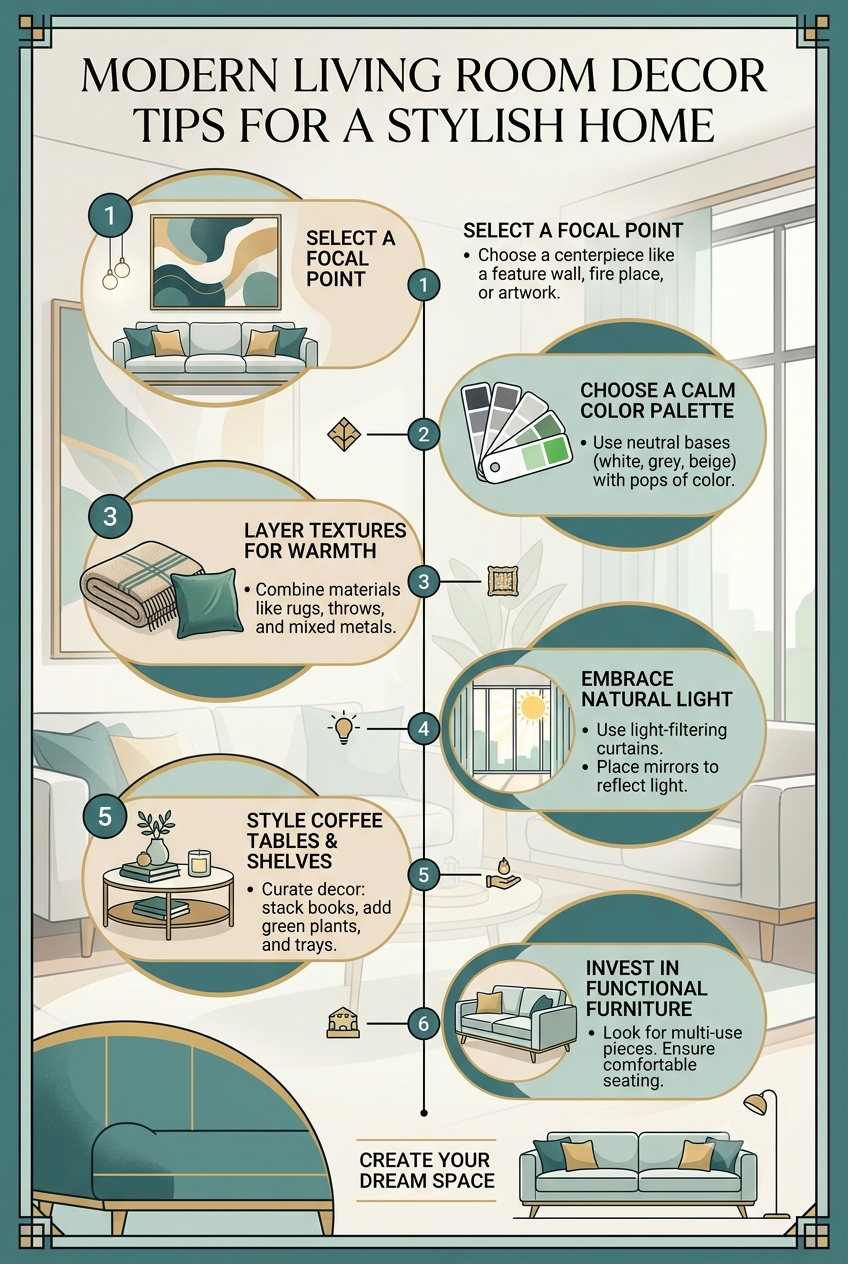
1. The Power of a Singular Focal Point
In interior architecture, the eye naturally seeks an anchoring element upon entering a space. Without a deliberate focal point, a living room can feel chaotic, fragmented, or visually unbalanced. Modern living rooms thrive on intentionality, making the establishment of a focal point an essential first step.
A focal point can take many forms depending on the structural layout of your home:
Architectural Features: A floor-to-ceiling fireplace, exposed brickwork, or large floor-to-ceiling windows offering expansive outdoor views.
Statement Artwork: A large-scale abstract painting or framed photography print hung centrally above the sofa.
Feature Accent Wall: A wall textured with vertical wooden slats, deep dark paint shades (such as forest green or midnight blue), or contemporary geometric wallpaper.
Once your main feature is determined, arrange seating and supplementary decor to subtly orient toward it. This creates an inviting structural flow that naturally guides human interaction and sightlines.
Pro Designer Tip: Avoid having competing focal points. If you have both a wall-mounted television and a fireplace on different walls, consider integrating them onto the same wall surface or using a sliding gallery panel to cover the screen when not in use.
2. Crafting a Balanced and Calm Color Palette
Color fundamentally influences mood and spatial perception. Contemporary design heavily relies on cohesive palette strategies that promote tranquility while avoiding monotony. The foundation of modern living room decor typically rests on muted, neutral base tones—such as warm off-white, soft beige, taupe, or light slate grey.
To ensure the space remains dynamic rather than stark, incorporate the classic 60-30-10 color rule:
60% Dominant Color: Applied to walls, large rugs, or major sectional sofas (e.g., crisp warm white or muted ivory).
30% Secondary Color: Applied to curtains, accent chairs, or secondary cabinetry (e.g., sage green, soft terracotta, or charcoal).
10% Accent Color: Applied through throw pillows, ceramic art, metallic finishes, or books (e.g., brushed brass, deep amber, or rich teal).
3. Layering Textures for Depth and Warmth
One common pitfall in modern design is creating spaces that feel overly clinical or sterile. The solution to this challenge lies entirely in texture layering. When a room utilizes a streamlined color palette, variation in material surface textures becomes the primary driver of visual interest.
Mix contrasting materials thoughtfully throughout the space:
Soft Textiles: Combine chunky knit wool throw blankets, smooth velvet accent pillows, and washed linen window drapes.
Natural Elements: Integrate warm, grain-rich woods (such as oak or walnut) alongside woven jute or high-pile bouclé rugs.
Hard Accents: Intersperse matte black steel structural legs, polished marble coffee table surfaces, and warm brushed brass lighting fixtures.
The contrast between hard and soft surfaces invites tactile engagement, transforming a simple room into an inviting, cozy sanctuary.
4. Maximizing Natural Light and Ambient Layering
Lighting can single-handedly elevate or diminish an interior concept. Modern living room design prioritizes natural daylight while establishing a rich, multi-tiered artificial lighting scheme for evening hours.
Harnessing Natural Light
Keep windows as unobstructed as possible. Replace heavy, dark drapes with sheer linen curtains that diffuse sunlight while maintaining privacy. Additionally, place large wall mirrors or floor mirrors opposite or adjacent to windows to bounce daylight into darker corners of the room.
The Three Layers of Interior Lighting
Relying solely on a single overhead ceiling light produces harsh shadows and flat visual dimensions. Instead, construct your lighting plan using three distinct layers:
Ambient Light: General illumination provided by recessed ceiling lights or flush-mount dimmable fixtures.
Task Light: Focused lighting for specific activities, such as an adjustable floor lamp next to a reading armchair.
Accent Light: Decorative lighting that highlights artwork, shelving details, or architectural features, such as LED strip lighting under floating cabinets.
5. Functional Furniture and Smart Spatial Planning.
Modern living room furniture should strike an ideal balance between clean aesthetics, ergonomic comfort, and practical utility. Scale and proportion are paramount—oversized furniture in a small room creates claustrophobia, while undersized pieces in an expansive space feel lost and floating.
Opt for furniture pieces that maintain clean lines and low profiles, which keep sightlines open across the room. Modular sectionals offer flexibility for social gatherings, while multi-functional furniture—such as ottomans with hidden storage, nesting side tables, or media consoles with wire management systems—ensures clutter remains out of sight.
Spatial Layout Guidelines: Always allow at least 30 to 36 inches of clear walkway space between major furniture pieces. Coffee tables should ideally sit 14 to 18 inches away from sofas to allow comfortable legroom while keeping drinks within easy reach.
6. Styling Coffee Tables, Console Surfaces, and Shelving
The final polish of a modern living room relies on thoughtful accessory curation. The goal is to display meaningful items without overwhelming surfaces with clutter.
The Rule of Threes and Triangles
When arranging decor items on coffee tables or shelves, group objects in odd numbers (specifically threes). Vary the height, texture, and scale of items within each group to create visually appealing triangular compositions.
Essential Styling Elements
Hardcover Coffee Table Books: Stacked horizontally to create elevated bases for small decorative bowls or objects.
Organic Greenery & Floral Elements: A ceramic vase with fresh eucalyptus, dried pampas grass, or a healthy potted monstera plant brings vital organic life into modern interiors.
Sculptural Accessories: Unique ceramic trays, marble coasters, or scented candles in frosted glass jars add tactile elegance.
Conclusion: Creating Your Personal Modern Haven
Designing a modern living room is an evolving journey of balancing form and function. By establishing a clear focal point, curating a calming color palette, layering tactile materials, and illuminating the space thoughtfully, you create an environment that feels polished yet lived-in. Ultimately, a stylish home is one that reflects your personality, supports your everyday routines, and offers a beautiful, comforting space to welcome life’s moments.